The New Year is a great time to take stock of your career—where
you are, where you want to go, and how you are going to get there. Whether you want to make small changes, learn new skills, get a promotion, or even find a new career, it starts with a few simple steps. Here is a five-step strategy to help you reach your goals:
1. Take stock of where you are now. This includes the
obvious—the things you do on daily basis,
what you are responsible for, what you enjoy doing, and what you
don’t enjoy doing. Think about your job or career. Do you have all the skills you need? Are you happy? Do you want to stay, grow, move up, or move on?
 |
| Step one: Make some lists. |
This step is as simple as making three lists. First, list all the things you do. Second, list the things you like about your job and enjoy doing. And third, list the things you don’t.
2. Once you’ve taken stock, think about the future--one year
from now, five years from now. Do you want to be doing the same thing? What do
you want more of? What do you want less of? What skills do you want to learn?
What type of people do you want to work with? What sort of work-life balance do
you want? Do you want to stay in the same field?
 |
| Step two: Where do you want to go? |
Think about what you want, the things you want to change,
the ways you want to grow, the things you want to do differently or better, and
the job or career you want to have.
3. Write specific goals. What do you want? This is where the
rubber hits the road. Once you’ve determined what you are doing now, what you
want to be doing more or less of, and where you want to grow, it's time to set specific
goals.
When setting your goals remember to make them smart, or rather S.M.A.R.T. Achievable goals must be:
And be sure to write them down. Studies show that people who write down their goals outperform those who don’t by a whopping 300 percent. When you write it down, it becomes tangible. Make it a daily visual reminder; post it where you see it every day.
When setting your goals remember to make them smart, or rather S.M.A.R.T. Achievable goals must be:
- Specific
- Measurable
- Actionable
- Realistic
- Timely
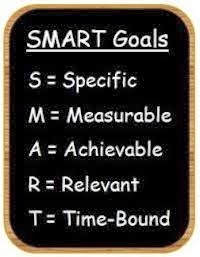 |
| Your goals must be S.M.A.R.T. |
And be sure to write them down. Studies show that people who write down their goals outperform those who don’t by a whopping 300 percent. When you write it down, it becomes tangible. Make it a daily visual reminder; post it where you see it every day.
 |
| Successful people write down their goals. |
4. Now, develop an action plan. I like to do something called
backward action planning. Here’s how it works: Look at your goal and work
backward from it. How will you get there? What are the steps you'll have to take from where you are now to your ultimate goal? You may have to develop a series of subgoals to get there.
For example, let’s say your goal is to be president of the
United States. What is the goal that happens right before that one? Probably being
a governor or senator. And what is the goal that happens right before that one?
Probably being a U.S. representative. And before that? Local or statewide
office. And before that? Working in a congressional or state political office
or on a campaign. And before that? Studying law or political science. You get
the picture.
Whatever your goal is, figure out where you are now and the
steps it takes to get where you want to be. You may be really far off or you
may be closer than you think. Either way, you have to figure out the subgoals
and milestones it takes to get to your top goal.
Then, you have to figure out the steps to get there,
including all the actual, tangible tactics and strategies you will need. Think
about what it takes to be vice president of marketing, for example. Do you need to go back to school? Learn new skills? Your action plan has to include all the work, networking, skills,
education, abilities, and steps it takes to get there. You have to understand
all of the actions it will take to reach your goal.
And you have to include the things you don’t like or want to do, too. If your goal is to hold public office
and you hate to fundraise or schmooze, you have to rethink the goal or suck it
up. It’s not easy and you don’t always get to do just the things you love. You
have to work at achieving goals, and that means doing things you don’t like.
5. Finally, just do it. This is where most people fail.
You have to align your actions with your goals, and that means every day you
have to do the things that get you there.
Let’s say one of your professional goals is to become a better writer, but every day you don’t write. You put it off or simply choose to do other things. Well, that isn’t going to get you to your goal. You have to practice the steps every single day, or pretty close to it. Your everyday choices must be aligned with the actions you need to take to reach your goal.
Schedule it. Put it on the calendar. Do whatever it takes to work in the steps, strategies, and tactics necessary to reach your goal. You have to do the work.
Let’s say one of your professional goals is to become a better writer, but every day you don’t write. You put it off or simply choose to do other things. Well, that isn’t going to get you to your goal. You have to practice the steps every single day, or pretty close to it. Your everyday choices must be aligned with the actions you need to take to reach your goal.
Schedule it. Put it on the calendar. Do whatever it takes to work in the steps, strategies, and tactics necessary to reach your goal. You have to do the work.
It’s not easy, but it’s pretty straightforward. There is no magic bullet here, just hard work and dedication. Be clear about your goals, make sure they are realistic, write them down, make a plan of action, and then take the right steps every day. If you stay focused and strong, you'll get there.
Good luck!
For more information
on Careerstone Group, please visit our website:
~~~
To watch
or listen to Mary's media appearances, please visit our media page: