Showing posts with label career advice. Show all posts

Wednesday, April 23, 2014

Myers-Briggs: Why Your Personality Matters

Ever wonder why you just can’t get along with Bob in accounting? Or why you and Shelly from marketing work so well together? Or why you prefer the back room to the show room? Of course, it’s your personality. We are all naturally inclined one way or the other, and our personalities are a crucial part of how well we perform at work and engage with others.

Knowing your personality type can help you at every stage of your career, from choosing a field to choosing a firm, from figuring out how to get along with coworkers to leading a team.


Know yourself, and you will thrive.

If you know yourself and how you will react and interact with others, you will be able to make better choices when it comes to choosing the type of career or office environment in which you will thrive. The more you know yourself, the more successful you will be.

And there is no better way to know yourself than with a personality assessment like the Myers-Briggs Type Indicator (MBTI), the gold standard in the industry.

Are you an ENFP? An ISTJ?

Myers-Briggs is an assessment of your personality preferences. It’s not a cut-and-dried diagnosis. Rather, it is an interpretation of how you prefer to interact, receive information, make decisions, and engage with others and the world around you.

MBTI, the gold standard in personality tests.

There are four areas of inquiry, with a total of 16 distinctive personality types that can emerge. Again, these are preferences. We all share some of the same traits across the spectrum; what the MBTI does is gauge your overall preferences.

From the Myers-Briggs website, the four areas are:

1. Favorite world: Do you prefer to focus on the outer world (Extroversion, or E), or the inner world (Introversion, or I)? This is how you derive your energy—do you get it from the outer world (E) or by being alone (I)?

2. Information: Do you prefer to focus on the basic information you take in (Sensing, or S) or do you prefer to interpret and add meaning (Intuition, or N)?
3. Decisions: When making decisions, do you prefer to first look at logic and consistency (Thinking, or T) or first look at the people and special circumstances (Feeling, or F)?
4. Structure: In dealing with the outside world, do you prefer to get things decided and keep them structured (Judging, or J), or do you prefer to stay open to new information and options (Perceiving, or P)?

Based on how you answer a series of questions based on the above areas, your personality type might emerge as an ENFP, an INTJ, or any combination of the above.

Why It Matters

Again, knowing your personality type can profoundly influence how well you do in the world—personally, socially, and professionally. If you know you are an introvert, you might want to choose professions or office environments where people are encouraged to work independently. If you are an extrovert you might want to choose a field where engaging with others is paramount. The Myers-Briggs website says it best:
“Work environments influence how comfortable you are at your job. Someone with a preference for Introversion, for example, who is required to do a lot of detail work or think through a problem, may find it disruptive to be in an environment that is too loud or where a lot of interaction is required. When you know this about yourself, you can make arrangements to do your work in a more suitable location or at a time when there is less activity and interference.”
Knowing your personality preferences can be the difference between success and a lot of frustration.

Know Thyself!

MBTI can only be administered by certified professionals, and I encourage everyone who can to take an assessment. Ask your HR department if they offer it or find a consultant to administer it. Short of that, there are lots of personality tests and MBTI-type quizzes out there, which can give you a good sense of your personality preferences. Try these:


Knowledge is power. Know yourself, and you can make better choices and interact with the world in the way that suits you best. It’s a smart career move. Good luck!

~~~

For more information on Careerstone or to schedule an MBTI Assessment,
please visit our website: Careerstone Group


To watch my MBTI segment on ABC 7's Washington Business Report,
please visit: Careerstone Media-TV

Thursday, January 9, 2014

Take Stock of Your Career and Set New Goals: A Five-Step Strategy for Success

The New Year is a great time to take stock of your career—where you are, where you want to go, and how you are going to get there. Whether you want to make small changes, learn new skills, get a promotion, or even find a new career, it starts with a few simple steps. Here is a five-step strategy to help you reach your goals:

1. Take stock of where you are now. This includes the obvious—the things you do on daily basis, what you are responsible for, what you enjoy doing, and what you don’t enjoy doing. Think about your job or career. Do you have all the skills you need? Are you happy? Do you want to stay, grow, move up, or move on?

Step one: Make some lists.

This step is as simple as making three lists. First, list all the things you do. Second, list the things you like about your job and enjoy doing. And third, list the things you don’t. 

2. Once you’ve taken stock, think about the future--one year from now, five years from now. Do you want to be doing the same thing? What do you want more of? What do you want less of? What skills do you want to learn? What type of people do you want to work with? What sort of work-life balance do you want? Do you want to stay in the same field?

Step two: Where do you want to go?

Think about what you want, the things you want to change, the ways you want to grow, the things you want to do differently or better, and the job or career you want to have.

3. Write specific goals. What do you want? This is where the rubber hits the road. Once you’ve determined what you are doing now, what you want to be doing more or less of, and where you want to grow, it's time to set specific goals.

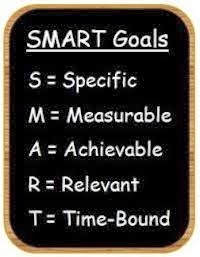
When setting your goals remember to make them smart, or rather S.M.A.R.T. Achievable goals must be:
  • Specific
  • Measurable
  • Actionable
  • Realistic
  • Timely
In order to be doable, goals must follow these five rules. If your goals don’t meet these criteria, rethink or modify them.


Your goals must be S.M.A.R.T.

And be sure to write them down. Studies show that people who write down their goals outperform those who don’t by a whopping 300 percent. When you write it down, it becomes tangible. Make it a daily visual reminder; post it where you see it every day. 

Successful people write down their goals.

4. Now, develop an action plan. I like to do something called backward action planning. Here’s how it works: Look at your goal and work backward from it. How will you get there? What are the steps you'll have to take from where you are now to your ultimate goal? You may have to develop a series of subgoals to get there. 

For example, let’s say your goal is to be president of the United States. What is the goal that happens right before that one? Probably being a governor or senator. And what is the goal that happens right before that one? Probably being a U.S. representative. And before that? Local or statewide office. And before that? Working in a congressional or state political office or on a campaign. And before that? Studying law or political science. You get the picture.

Whatever your goal is, figure out where you are now and the steps it takes to get where you want to be. You may be really far off or you may be closer than you think. Either way, you have to figure out the subgoals and milestones it takes to get to your top goal.

Then, you have to figure out the steps to get there, including all the actual, tangible tactics and strategies you will need. Think about what it takes to be vice president of marketing, for example. Do you need to go back to school? Learn new skills? Your action plan has to include all the work, networking, skills, education, abilities, and steps it takes to get there. You have to understand all of the actions it will take to reach your goal.

And you have to include the things you don’t like or want to do, too. If your goal is to hold public office and you hate to fundraise or schmooze, you have to rethink the goal or suck it up. It’s not easy and you don’t always get to do just the things you love. You have to work at achieving goals, and that means doing things you don’t like.

5. Finally, just do it. This is where most people fail. You have to align your actions with your goals, and that means every day you have to do the things that get you there.

Let’s say one of your professional goals is to become a better writer, but every day you don’t write. You put it off or simply choose to do other things. Well, that isn’t going to get you to your goal. You have to practice the steps every single day, or pretty close to it. Your everyday choices must be aligned with the actions you need to take to reach your goal.

Schedule it. Put it on the calendar. Do whatever it takes to work in the steps, strategies, and tactics necessary to reach your goal. You have to do the work.

It’s not easy, but it’s pretty straightforward. There is no magic bullet here, just hard work and dedication. Be clear about your goals, make sure they are realistic, write them down, make a plan of action, and then take the right steps every day. If you stay focused and strong, you'll get there.

Good luck!


For more information on Careerstone Group, please visit our website:

~~~

To watch or listen to Mary's media appearances, please visit our media page:


Wednesday, May 30, 2012

Career advice for college grads: Five tips for career readiness


Congratulations, graduates! Now the hard work of getting into the working world begins. Though there are many different areas to focus on, there is a simple prescription for a successful and smooth entry into the workforce, and it starts here:


how to write a resume
1. The all-important resume. Resumes should tell a story about who you are and what your skills and talents are. Clearly, a 21-year old is not going to have the same resume as a seasoned veteran, but employers know this, so don’t worry about impressive credentials. Just do the best you can with your experience so far and find things that highlight your strengths and applicable skills.

2. What to put on your resume. Any kind of job, internship, volunteer work, or affiliation needs to go on your resume. The most important thing about “starter” jobs is to show that you were given responsibility -- If you were a lifeguard, put it on (that’s a position of great responsibility). If you worked in an ice-cream shop, put it on. Did your manager give you tasks that reflected a level of responsibility, like locking up at night, opening in the morning, making deposits, running the register? Also highlight those jobs or activities in which you were part of a team and helped lead it or had responsibility of some sort: Did you hold any leadership positions in clubs or sports team? Did you help with fundraisers or special events? Did you do volunteer work? Whatever you did or were involved in that reflects leadership and responsibility should go on your resume.

3. What the resume should look like. Don’t get fancy. Resumes should be simple, easily readable, and written in a standard format. Google "how to write a resume" to get a sense of what is standard. Don’t go over one page (unless you have had  a lot of jobs) and don’t use fancy fonts or colored paper. Pink paper and unreadable type are annoying to an employer. You want to stand out because of who you are, not because your resume is kitschy. And always, always, always spell check. Nothing sinks a candidate quicker than misspelling liaison.

4. Use your college. Your college wants you to be a successful alum, so use their career center. Many colleges offer career counseling, job fairs, and internship programs. Some will set up real or practice interviews for you and help you with your resume. Many offer personality and skills tests that can help you focus on your career choices.

And use your school's alumni network! Most alums registered with the career center are more than willing to help new graduates. Usually, they are broken out by profession and can be counted on to provide information about a certain field, advice on getting into it, and will review your resume. They may also off internships, informational interviews, and invaluable contacts in your field. Don’t be shy—this is networking, and it is one of the best ways to get a job. Use your friends and professors, too. Does someone have a parent, sibling, or associate in your field? Again, don’t be shy. This is what networking is all about.

5. Think before you take the summer off. While it may be true that this is your last summer of “freedom,” you need to remember that there are millions of other graduates who are getting out of the gate and into the market. Look at the hiring cycle of your desired profession or industry. If you want to enter one that actively seeks college graduates, then taking the summer off is not a good idea. In other professions, entry-level jobs open up all the time, so taking one last summer off may not be a big deal. But remember: this is not the same economy as five years ago; jobs are scarce and the market is tough.

Sunday, January 3, 2010

How to work from home: Six steps to success


Today, more and more people are opting to telework—to work from home. Whether you are an independent contractor with your own business, a freelancer, or a regular nine-to-five employee, the option to work from home is more prevalent than ever, and more and more people are taking advantage of this opportunity.

Teleworking offers many advantages, like more flexibility, no commute, no dress code, and more time with the family. Sounds like a win-win, right? Well, yes and no. There are plusses and pitfalls to working from home, but you can easily structure your teleworking to be productive and meaningful.

The pros of working from home

Many of the benefits to working from home are “fun.” You can work in your pajamas, your dog can sit in your lap, you can go without a shower, you can listen to whatever music you want. Other benefits are very real, in terms of the bottom line. For example, your commute is however long it takes to get to your computer, so you save time, money and the stress of having to get to the office every day. There are also no unwanted interruptions from office mates or office drama to distract you. This offers more potential for increased focus, concentration and productivity.

For the employer, the benefits are many, as well. Increasingly, many people want to telework, so this is a great perk to offer your employees and a great recruitment tool. Working from home can increase employee satisfaction and morale, and both of those can contribute to increased productivity. The employer’s overhead also goes down, which adds up to a substantial savings. Teleworking can be a win-win for both employer and employee.

If you’re a freelancer or consultant you’re on your own here, but if you are a company employee, your firm may provide assistance or equipment for your home office. Don’t expect much, though. Teleworking is still new enough that most companies don’t provide assistance, but you can always ask. You never know. Your company may be willing to offset the cost of or even provide a smart phone, a phone line, a computer or other necessities for your home office, so you can be as productive as possible and communicate effectively. Just ask them what they are willing to provide.

The cons of working from home

There is a downside to working from home. Remember that the workplace is s social organization, and when you work from home that social fabric is missing. Person-to-person interaction is gone. You can feel disconnected. This can hurt you emotionally, especially if you are social person, but it can also hurt teamwork and workplace relationships, both of which are crucial to getting things done. You may also miss out on the political “game” of the office, which is actually a crucial component of networking.

Conversely, even if you like to be separate and out of the mix, you can feel as if they don’t trust you, especially if they ask you to attend meetings, check in, or call to check up on your work. And if you are not a self-motivated person or if you need a lot of instruction or supervision, working from home may not be right for you.


Setting yourself up for success

If you do choose to work from home, it is imperative that you set yourself up for success. Many people think working from home would be heaven. In reality, lots of people flail when they telework because they are distracted by their homes. They forget that working from home has to emphasis the work, not the home.

In order to be successful, you have to take it seriously and set clear boundaries in your home. Whether you are a consultant, a freelancer, or a full-time employee, if you are going to work from home successfully, it all boils down to self-motivation and self-control. You’ve got to be able to set boundaries, minimize distractions, and focus on the work. Here’s how:

First, carve out a home office. You need to have a dedicated space for your work. The living room couch won’t cut it. You have to take teleworking seriously, and this is best achieved if you take your workspace seriously. You need a place to work without distraction, a place that is recognized by your family as your workspace and a place where you can keep your work materials safe and separate from your home life.

Second, create boundaries, not just with a clearly defined workspace but also with your family and friends. Establish a protocol, make clear when you are working and when you can and can’t be disturbed.

Third, equip yourself properly and professionally. Get a computer just for you and your work. Get the proper supplies. And get a dedicated phone line for your work. You can’t be taken seriously if your husband answers the phone in his usual charming way, or your son doesn’t take proper messages, or your daughter rushes you to get off because she is waiting for a call, or if your answering machine features the cute-only-to-you voice of your five-year-old. If you are going to work from home or have a home business, you have to prepare yourself and behave in a professional manner. And this means a separate line for work calls.

Fourth, reduce distractions. You have to be able to ignore the laundry, the dishes, Mad Men Season Five, running errands, and other household distractions. And, just like at the office, don’t constantly answer personal phone calls, e-mails, or surf the Internet while working. But don’t be foolish about it either; set aside time every hour to do so. Just remember, working from home is more about the working than the home.

Fifth, establish the parameters of your working hours. If you are with a company find out when they want you to be available and stick to that. They will establish with you some guidelines. If you are freelance, you can obviously establish your own hours, but you have to decide what those will be. Will you take clients calls 24/7? Is lunchtime blocked out? When will you start? When do clients want you to check in? Working from home can be a slippery slop to all access, all the time, so think about what you or your company wants, and set your schedule. Just because you work from home doesn’t mean you shouldn’t have set hours. Just decide what those will be.

Sixth, continue to network. Whether you are an extrovert or an introvert, one of the most important things to do in business is to network. And those who work from home are already cut off from the workplace, so you have to make an extra effort to get out there and network.

These days, lots of networking can be done on-line, through sites like LinkedIn, Facebook and others. But you should still maintain an active physical presence. Nothing beats face-to-face interactions, and you should always look for ways to do so. If you work for a company, make sure you go to the office at least once a week. Attend meetings, lunches, social gatherings and other opportunities. You have to combine the electronic world with the physical world in order to keep your network healthy and growing.

If you are a freelancer or a consultant, find ways to network. Go to parties, lunches, seminars and programs. Join clubs and professional organizations. You have to combine the electronic world with the physical world in order to keep your network healthy and growing.

Working at home can be productive, rewarding, convenient and cost-effective. The key is to set yourself up for success and remember to focus on the work.

Listen to Mary discuss this topic on Clear Channel’s “The Working Life” radio show: http://www.wmzq.com/pages/wafaudio.html

Saturday, September 5, 2009

Is your network wide enough?

Diversify Your Network


In any market, the most important thing you can do to advance your career and professional interests is to network. But now, as our economy shifts and changes, as new technologies arise and old ones are replaced, networking is more imperative than ever.


By the same token, it is important to remember that these are business relationships. Yes, you want to build on common interests and yes you want to establish relationships with people you like, but remember that this is a different situation than building friendships. Women, very often fall into this trap, which is odd, given that women are naturally more social creatures than men.


Women are at another disadvantage when it comes to networking, for the reason that they don’t do it often enough. Networking requires going out for drinks after work, or having breakfasts or the like. But because women have more demands on their time with family obligations they don’t network the way they should. This is a mistake, and women need to make more of an effort to get out there and do what they have to to establish and nurture their network. Start small. Commit yourself to a networking event or opportunity once every other week, building to a networking event at least once a week.


Opportunities don’t come from the sky. They come from other people. Who you know is still as important as what you know. And this means networking. Without developing a network, how are other people going to find you? Who is going to come knocking on your door? You have to create and nurture a healthy network, so opportunity can find you.


The key to effective networking in the twenty-first century is to diversify. It’s not enough to do the same old thing, to stick to your chosen field and the players in it. Today, you have to branch out and diversify to other people, in other fields and in other ways. Here’s how.


Get Connected
We live in a hyper-connected world, and in order to network effectively you have to be a part of that world. The good news is that networking electronically is easy, popular and effective. You can get and stay connected via any number of technological means: LinkedIn, Facebook, MySpace, Twitter, blogs, and any number of other electronic and on-line forums and associations.


If you are flummoxed by these new technologies or sites, have someone show you how to access and use them. It’s actually very simple. Once on them, you need to maintain them and respond to people in a timely fashion. Don’t be embarrassed if this way of doing things is unfamiliar and strange to you. Get over it and get on board; everyone is doing it and so should you.


And you can’t afford not to. The reach of these sites and technologies is simply amazing. Facebook, for example, has 250 million users, and the fastest growing demographic on that site is over 35 years old. LinkedIn, a professional rather than social site, has 25 million users, of whom 31 percent are over the age of 45. Demographically, on-line networking sites are not just for the young. Everyone is on them. You should too, and it’s as easy as a mouse click.


Freshen Up
The thing about networks is that most people don’t use them until they need them. This is a mistake. You should always be networking and you should always be tending to your network. Whether you have been actively networking or not, now is a good time to freshen up or even get started. Reconnect with people. Have coffee, have lunch or breakfast. Go to events. Join associations and clubs. Attend seminars and industry events. Find colleagues, new and old, through appropriate Internet sites. Connect, connect, connect.


The point is to freshen up your old contacts and network by reconnecting with them, and then start fresh with new networks. You need to build relationships before you need them, so take the time and energy to do it right. The best time to develop a network is when you don’t need it. So get busy.


Be Real
The obvious reason to have a network is to use it to stay informed, engaged and plugged in. It’s also the best way to find opportunities. But the key to being an effective networker is not to appear desperate, needy or on the make. Don’t be smarmy and obvious about your intentions. The point of networking is to build bonds with people who you like, who share interests and who, of course, can help you. But if you appear insincere, phony or too ambitious, it will backfire. Be real.


But very often women focus on the personal rather than on business. For example, women are naturally inclined to become friends, and often resort to cute shoes, love the bag, sort of things rather than on business.


The final imperative to the new rules of networking is to diversify your network. You have to look beyond your specific field, your current colleagues and your current industry. Think this way: What are my transferable skills? What are my interests? Then, look into those fields and start networking there.


Don’t get stuck in one field or one industry. In order to diversify you have to really think about where you can use your skills. Break out of your industry and your employment comfort zone, so you can broaden your base of opportunity.


Second, you also have to diversify the people with whom you network. It’s not your father’s business world anymore. Chances are your peer group doesn’t look the way it did 20 years ago. Today’s market moves so fast that your network has to include those above and below you, those younger and older than you, those with different skin color and sexual orientation. Younger generations are often forgotten when older people network. But remember, the people in Gen Y and Gen X and even younger will be decision makers, managers and leaders before you know it. Your network must include them, no matter where they are now. 


Your network has to be multi-generational, multi-cultural, and multi-industrial. That is the best way to bullet proof your career.


You can watch Mary discuss this topic on tv: http://careerstonegroup.com/media.html

Why you should take a vacation

As great as a week (or two) at the beach sounds, would you believe that one-third of working Americans will not use all of their allotted vacation time this year? And if they do, half of the time they take their work with them. Sure, the economy is rough and many of us are holding on to our jobs for dear life, but come on. Take that vacation already. Here’s why.

The American Way


What is it about Americans? About 40 percent of American workers don’t take any vacation at all. Twenty-five percent of American workers don’t even get vacation time. In the industrialized world, Americans rank last in terms of vacation. We average two weeks a year while Europeans average six.

While the current economic situation may affect how and where people vacation, it is probably having a residual effect of the simple act (and paid perk) of taking a vacation. People may actually be afraid to take their vacation time for fear it will make them look less dedicated, or give someone else an opportunity in their place, or are simply afraid to leave their company for any reason, be it self importance or inertia.

But the fact of the matter is that taking a vacation is a proven way to reduce stress and rejuvenate yourself. You may be afraid to do it, but you will be much better off for it.

The Benefits of a Vacation


Imbibing fruity drinks is not only the only benefit to a vacation. Studies show again and again that vacations reduce stress, promote creativity, stave off burnout, strengthen personal and familial relationships and help job performance. Vacations de-stress and re-charge. Seriously, vacations are an absolute physical and emotional necessity. We are healthier for it, by sleeping more, eating better, maybe even exercising a bit. We get away from work, and that is a good thing.

Every management guru (and good boss) knows that taking frequent breaks from work promotes better brain activity and creative thinking. When someone is exhausted or stressed, their mind shuts down to the point where they are no longer productive or effective. So you have to occasionally get away from work to be the most productive at work. Most high-tech companies have this figured out, which is why they feature lavish and funky break rooms with baristas, couches, scooters, massage therapists, video games and the like to help their employees disconnect and recharge.

The yearly two-week vacation is the equivalent to the fifteen-minute break in the workday; it is an essential component to one’s mental and physical health, and the hallmark of a productive person. What are you waiting for?

Making the Most of It

Now that you are convinced of the imperative of taking a vacation, it is essential to remember that not all vacations are created equal. What’s great for one person may be a nightmare for another. And some vacations may actually cause more stress and make you worse off. Like to lie around and do nothing? Then that ambitious trek through all the cathedrals of Northern Europe may not be the trip for you. Conversely, if you are a type A who loves to go go go, then two weeks on a remote beach may make you crazy. The vacation you take should match not just your interest but your energy level as well.

By the same token, what you take on vacation is important, too. By that I mean try not to take your work with you. Why are you taking your Blackberry and laptop with you? Unless you are running your own business, where your absence will be detrimental, you are not getting paid to respond to emails and voicemails. So leave the work gadgets behind. However, for some people, just knowing that they can stay connected might help them alleviate the anxiety of even taking a vacation. In that case, by all means, take them with you. Remember: the point of a vacation is not necessarily to do nothing. The point is to disconnect and disengage yourself from your work.

If you are a business owner put someone in charge. If you have to take your gadgets with you, try to use them for monitoring and updates, rather than running the show. Try to observe, rather than involve yourself.

It’s also important to know yourself well enough to know what length of vacation will work best for you. Some people like to take one big one, while others like to take lots of four-day weekends. It’s all about you and how quickly you can disconnect from work. Several short vacations throughout the year can be as beneficial as one good long one. Whatever recharges your batteries best is what you should do.

And you should take the time to lay the groundwork for your vacation. A few weeks before your vacation (after you’ve cleared it with your boss), inform your colleagues, clients and anyone else who may be impacted by your absence when and how long you will be gone. Make sure those who need to know, know. Make a list of all your current projects and their status. Ensure that your back up is clear about where to find all information. Make sure you put an away message on your email, phone, and cell phone, and be clear about your time frame. And be sure to include a contact person for your absence. Make sure your office knows under what circumstances you should be reached. And finally, you have to trust your colleagues to manage things while you are gone. It’ll be OK. Honestly.

Getting Back to Work


The hardest part about taking a vacation is coming back and returning to hundreds of papers, emails and voicemails. But you don’t have to face Monday morning with dread.

First of all, try to return a full day ahead of your scheduled return to work so that you can catch up at home. If I am going to be on vacation and return to work on a Monday, I try to get home by Saturday so that I have all day Sunday to get my house in order – unpack, check and answer messages, do laundry, sort through the mail, grocery shop, etc. That way, when I return to work, at least my home front is back in order.

On Monday, start early. Try to arrive before others so that you can get a jump on things without being distracted. Turn off your vacation responders or change your messages. Then, start with e-mails. Go through them quickly, deleting junk and prioritizing the rest. Ditto the mail and your messages. Then, schedule an appointment with your boss or assistant for later in the morning to bring you up to date quickly. And instead of having a half dozen conversations with colleagues about your trip, try to get everyone together at once over coffee or lunch. Don’t let being away suck you into a stressful, overworked situation from the get-go. Just prioritize and stay focused. And remember to take a break.

You can watch Mary discuss this on TV:


You can hear Mary discuss this topic on the radio. Click on The Working Life audio: http://www.wmzq.com/pages/wafaudio.html


Sunday, May 31, 2009

The partnership paradox: How to choose a business partner

The Partnership Paradox: How to Choose a Business Partner and Manage the Partnership

Starting your own business is an enormous undertaking. The to-do list seems endless, as does the number of decisions you must make. One of the most critical, strategic decisions you will make is whether to take a partner. This is one of the earliest and most important decisions entrepreneurs face. This choice will have a lasting impact on not only the success of the business, but on your emotional health as well.


Horror stories abound about the partner from hell and about partnerships gone wrong. Deciding whether to take a partner and choosing the right one is a strategic imperative, and if given proper focus and consideration, you can make the right choice, one that can have a profoundly beneficial impact on your business.


Do You Need a Partner?


The first thing to do is assess your situation and decide if you need a partner. Statistically speaking, businesses started by partners do better than businesses started by individuals, but that doesn’t mean your situation warrants or will be benefitted by a partnership.
Sometimes going it alone is the right course of action


There are many benefits to going it alone. First, it certainly is simpler. As president and chief executive, you'd have the authority to make crucial decisions and shape the future of your company without having to reach agreement with another individual or a group. Of course, this can be a good thing or a bad thing, depending on whether you work better as a consensus builder or as a maverick. If you're a sole proprietor you can brainstorm with employees and advisers, but ultimately company decisions and responsibilities will rest on your shoulders.


Second, without a partner, you will own it all. You won’t have to share the business's wealth, rewards or achievements. You will have complete control and complete recognition. Third, you won’t have any emotional ties with anyone and no conflicts or issues (personal or professional) to resolve with a partner. If you have the resources, the experience and the wherewithal, you should seriously consider going it alone.


On the other hand, there are many benefits to forming a partnership, including sharing the financial burden, the responsibilities and work load; benefitting from your partner’s experience, skill set and network; and added capital contributions. With a partner, you share the risk and the rewards, the breaks and the burden.


A partner can also provide valuable psychological, motivational and emotional support during tough business times. You can help each other out, lean on each other and work together to reach a shared goal. Two heads can be better than one.


So, the first step is to get clear on whether you need a partner or not. To do this, ask yourself these questions to assess your situation. Be honest -- there’s a lot at stake:

  • What are my goals?
  • What are my strengths and weaknesses?
  • What are my skill sets?
  • What skills or experience do I need for this business to succeed?
  • What are my financial resources?
  • What do I need to reach my goal, and where/how will I get it?
  • Skills
  • Experience
  • Network
  • Financial investment potential or stability
  • Personality
  • Relationship needs
  • Is there someone who can help me reach my goals?
  • What are his or her strengths and weaknesses?
  • What does/doesn’t he/she bring to the table?
  • Do we have the same value system?
  • What is his/her work ethic?
  • Will she/he complement, duplicate or hinder me?


A critical assessment of what you have, what you need and where you want to go will determine if you can go it alone, if you need to take a partner and what you need to look for in a partner. If all you need is money, find investors or get a loan. If all you need is marketing or web or graphics capabilities, look for a good hire. But if you determine that you can reach your goal best with a partner, go for it.


It’s Like a Marriage, Only with a Bottom Line


In many ways, a business partnership is like a marriage. As with a spouse, you and your business partner are throwing your lots together and working toward a common goal. The qualities of a good marriage are virtually identical to those in a good, productive business partnership. You will likely get out what you put in. A good partnership requires:


A shared vision and goal
Mutual hard work
Open communication
Mutual respect
A balance of power
Effective conflict resolution


Like a marriage, a business partnership is not a decision to take lightly. There is a lot at stake here – money, time, effort, emotions. In addition, you’ll be spending many of your waking hours working with this person, so you’ll have to develop an effective working relationship. Choose well.


The Pitfalls


People make the same mistakes over and over again when choosing a business partner. We choose people either too much like ourselves or we choose people who are so different than ourselves that we are in constant conflict. Oftentimes two people who are technically brilliant start a business but neither has a head for numbers, a knack for rainmaking or any idea how to run a company.


People also rush the decision, which can be catastrophic for your mental and financial health. But perhaps the biggest mistake is not in the choice of partner but in how the partnership is structured and managed. Many partnerships do not get started on the proper, structured footing, with all the roles ad responsibilities spelled out. This is a critical. Partners should agree on the vision and the goal and should know who is doing what, the chain of command, etc. From the beginning.


And now a word about partnering with friends and family. This is rife with danger. Walk this line very, very carefully. Whoever coined the phrase, “It’s not personal, it’s business,” never had a business partner. With partners, it’s almost always personal on some level and at some point in the relationship. And if your partner is a friend or family member, it’s personal from the get-go.


Family and friendship dynamics will always seep in. If and when
something goes awry in the business (and it will), it will affect your relationship. And if something goes wrong in your family or friendship, it will affect your business (and your employees). There is very often little or no separation between family and friendships and the business.


While friends and family are often likely and good candidates for business partners, be aware of and consider the many pitfalls. If your partner is your brother or best friend, it is extremely difficult to keep personal issues out of the business, and business issues out of the personal. This is not to say that it can’t be done, but it is to say that you should be very wary of this approach.


I have seen this work brilliantly and I have seen it end very badly. Personally, I’ve been business partners with family members and friends several times, with varying degrees of success. I lost a very dear friend, who was a business partner at the time, over a business disagreement. On the other hand, I had an immensely fruitful and successful business relationship with my sister for 15 years. What was the difference? Well, I always said it worked because my sister and I had a lifetime of experience fighting and making up! But I think crystal clear goals, expectations and responsibilities helped make our partnership a success. Just be careful.


The How’s of Choosing a Partner


The next step is to choose your partner. In the first section, you determined your goals, analyzed your strengths and weaknesses and determined what you need to reach your goal. Now it’s time to choose a partner. Start by reviewing the answers to the questions you asked in the first section, the ones that assessed your strengths, weaknesses and goals. Now, think about what you need and draw up a set of criteria that you're looking for. You will use these criteria to judge potential partners later. The criteria must include a person’s:


Ask yourself:


Think about the criteria and the questions carefully. The goal is to choose a partner who complements your skills, not duplicates them. For example, if you are terrible at sales, then you should focus on someone for whom sales is a strong suit.


Think about the personality traits you can and can't work with
This requires you being really honest about who you are and what you bring to the table. Are you a control freak? If so, be honest about it and pick someone who isn’t a control freak! Two control freaks may not work well together. Similarly, are you a big picture/pie-in-the-sky type? Then you might want to pick somebody more detail-oriented and grounded. Are you a fast decision maker or do you like to think, think, think? Picking someone who is a slow decision maker might be a good thing or it might drive you crazy.


Also, what kind of relationship or psychological support do you need in the relationship? Do you want someone who is warm and nurturing? Do you want someone who is all business? Determine what type of person you want to work with and go from there.


Most importantly, pick someone who is as excited and as driven as you are to make this business idea a success. And pick someone whose work ethic matches your own. Find out early on whether your partner thinks a six-day workweek is to short or likes to punch out on Thursday and breeze back in on Monday.


Who NOT to Pick


Just as there are many qualities to look for in a partner, there are some obvious and not so obvious red flags, too.


First and foremost look at the person’s finances. You may not need a partner who brings any investment to the table, but you do not want to choose someone who is financially unstable. This is harsh but true: financial troubles often indicate a person who lacks discretion, self-control and good judgment. Running a business requires careful and sound financial decision making, and someone who has shown a lack of this in their personal life may not be the best choice for a business partner. Your partner doesn’t have to be a millionaire or possess MBA-type skills, but he or she does have to be financially mature and responsible. Furthermore, it may be some time before your new venture makes money, and if your partner comes into it desperate, it won’t be a good working relationship.


Second, pick someone who is mature and stable. Avoid people who are flaky or skittish or who have a history of flakiness. How can you tell? Well, have they had problems committing to other jobs or projects? Do they have a good reputation or a bad one? Can they commit and stick to your new venture?


Along those same lines, pick someone for whom drama is something they watch on TV, not a mantra for their personal lives. We all know people who thrive on drama. They should not be your partner. Also avoid people with a lot of personal baggage. Starting and running a business requires 100 percent of your attention. If someone is a drama king or queen, or who is distracted by their personal life, they will detract from your success. Avoid choosing them.


How about a maverick? Well, mavericks tend to be confident, self assured and energetic. But mavericks can also be a problem. They often shoot from the hip, don’t think things through and, by their very nature, are not good collaborators (that’s why they are mavericks). Tread lightly. I personally would never choose a maverick as a business partner.


Other red flags to seriously consider include if the person doesn’t listen well; doesn’t have strong emotional intelligence; has poor morals or ethical standards; doesn’t play well with others; doesn’t have a strong network or networking skills; has legal or emotional problems; is boastful or otherwise full of himself. These and any quality that rubs you the wrong way are all red flags. Pay attention to them because the problems that nag at the back of your mind now will be magnified 100 fold when that person becomes your partner.


Put a Ring on It


Or, in this case, legalize it. You’ve found a business partner you know and respect and you want to start a business together. Great. Now put everything in writing. Don’t be complacent or lulled into thinking that nothing could go wrong, that a handshake and mutual respect will be enough for your partnership. This is business; you need legal documents that spell everything out and that protect you and your partner from each other and the vagaries of business.


Luckily, none of these documents is rare or unusual. They are standard documents that can be procured on-line and customized or may be drafted for a nominal fee from any corporate lawyer.


First and foremost, you need a partnership agreement. This is a document that spells out the partnership and includes everything from how you’ll raise money to how you’ll divide responsibilities. It usually includes a buy-sell agreement, which spells out who can sell what and to whom, if one partner is given first right of refusal for the other’s shares. Etc. The agreement also often includes a non-compete agreement in case one partner leaves. Partnership agreements can and should also spell out bonuses, benefits, perqs, sick-time, continuing education, profit taking, what happens if a partner dies, voting rights, shares and sweat equity, etc.


There are many, many things to think about and as much of it as possible should be spelled out in your partnership agreement. You need to put it in writing. Discussing it and agreeing to terms is not enough; your agreement and partnership must be formalized in a legal document. I cannot stress this enough. Don’t skip this because you are friends or afraid of hurting someone’s feelings. This is business. Put it in writing. You must try to consider everything – especially the worst-case scenario – and cover it. It is money well spent to hire an experienced corporate attorney to draft an agreement for you.


Remember, a partnership can be the foundation of your business or it can be your complete undoing. But if you assess strategically, choose wisely, and manage effectively, your partnership can be the cornerstone of your business, and of your success.


You can hear Mary discuss this topic on the radio: http://www.wmzq.com/pages/wafaudio.html
You can watch Mary discuss this topic on tv: http://careerstonegroup.com/media.html