Wednesday, April 23, 2014

Myers-Briggs: Why Your Personality Matters

Ever wonder why you just can’t get along with Bob in accounting? Or why you and Shelly from marketing work so well together? Or why you prefer the back room to the show room? Of course, it’s your personality. We are all naturally inclined one way or the other, and our personalities are a crucial part of how well we perform at work and engage with others.

Knowing your personality type can help you at every stage of your career, from choosing a field to choosing a firm, from figuring out how to get along with coworkers to leading a team.


Know yourself, and you will thrive.

If you know yourself and how you will react and interact with others, you will be able to make better choices when it comes to choosing the type of career or office environment in which you will thrive. The more you know yourself, the more successful you will be.

And there is no better way to know yourself than with a personality assessment like the Myers-Briggs Type Indicator (MBTI), the gold standard in the industry.

Are you an ENFP? An ISTJ?

Myers-Briggs is an assessment of your personality preferences. It’s not a cut-and-dried diagnosis. Rather, it is an interpretation of how you prefer to interact, receive information, make decisions, and engage with others and the world around you.

MBTI, the gold standard in personality tests.

There are four areas of inquiry, with a total of 16 distinctive personality types that can emerge. Again, these are preferences. We all share some of the same traits across the spectrum; what the MBTI does is gauge your overall preferences.

From the Myers-Briggs website, the four areas are:

1. Favorite world: Do you prefer to focus on the outer world (Extroversion, or E), or the inner world (Introversion, or I)? This is how you derive your energy—do you get it from the outer world (E) or by being alone (I)?

2. Information: Do you prefer to focus on the basic information you take in (Sensing, or S) or do you prefer to interpret and add meaning (Intuition, or N)?
3. Decisions: When making decisions, do you prefer to first look at logic and consistency (Thinking, or T) or first look at the people and special circumstances (Feeling, or F)?
4. Structure: In dealing with the outside world, do you prefer to get things decided and keep them structured (Judging, or J), or do you prefer to stay open to new information and options (Perceiving, or P)?

Based on how you answer a series of questions based on the above areas, your personality type might emerge as an ENFP, an INTJ, or any combination of the above.

Why It Matters

Again, knowing your personality type can profoundly influence how well you do in the world—personally, socially, and professionally. If you know you are an introvert, you might want to choose professions or office environments where people are encouraged to work independently. If you are an extrovert you might want to choose a field where engaging with others is paramount. The Myers-Briggs website says it best:
“Work environments influence how comfortable you are at your job. Someone with a preference for Introversion, for example, who is required to do a lot of detail work or think through a problem, may find it disruptive to be in an environment that is too loud or where a lot of interaction is required. When you know this about yourself, you can make arrangements to do your work in a more suitable location or at a time when there is less activity and interference.”
Knowing your personality preferences can be the difference between success and a lot of frustration.

Know Thyself!

MBTI can only be administered by certified professionals, and I encourage everyone who can to take an assessment. Ask your HR department if they offer it or find a consultant to administer it. Short of that, there are lots of personality tests and MBTI-type quizzes out there, which can give you a good sense of your personality preferences. Try these:


Knowledge is power. Know yourself, and you can make better choices and interact with the world in the way that suits you best. It’s a smart career move. Good luck!

~~~

For more information on Careerstone or to schedule an MBTI Assessment,
please visit our website: Careerstone Group


To watch my MBTI segment on ABC 7's Washington Business Report,
please visit: Careerstone Media-TV

Tuesday, April 15, 2014

How to build trust at work

Trust is an essential component of effective organizations. Trust in the workplace is directly linked to increased productivity, morale, and commitment. It’s essential for building and maintaining workplace relationships, and it's essential for collaboration and success.

Trust is critical to build the relationships we need to be successful, both professionally and personally. Work—like other aspects of our lives—is a social system. We don’t do everything ourselves. We need other people to succeed, and that’s where trust comes in. 

Every day, we trust other people to do what they are supposed to do, to hold up their end of the bargain, so to speak. We rely on the mail to get delivered, the office to get cleaned, the network to work properly, the paperwork to be filed on time, etc. Trust is all around us, every day, and yet we don’t really consider how important it is.

Trust is something that must be built.

Trust means relying on other people. It means having faith that people are going to do what they are supposed to do. Even though trust is all around us, every day, it isn’t something that just happens. Building trust takes time and effort, and it’s a two-way street. You want to become a trustworthy person, and you also want to be able to trust others.

Here are five steps to build and improve trust at work:

1. Think about your capacity to trust. How willing are you to trust others? Do you have to do everything yourself because you don’t trust anyone else? If you are not willing to trust others they will not be willing to trust you. So, start at a place of trust, and work from there.

I can't say it any better.

2. Have competency trust in others. If you want to increase trust in the workplace you have to increase your trust in the competence of others. That means that you cannot micromanage people. You have to let them do their work. You have to trust their ability. If you are a manager, you have to trust that you have given clear directions. Let people do their work without micromanaging them.

3. Engage in contractual trust. This means do what you say you are going to do. You have to hold up your end of the bargain. When you say you will do something, treat it like a contract, and do what you say.

By the same token, don’t set yourself up for failure; you have to be honest and manage other people’s expectations. Don’t just give a blanket “yes,” for example. Be sure you know what they expect and then make sure you tell them when and how you will deliver. Manage their expectations, otherwise you won’t build trust.

If you are micromanaging, you aren't trusting.

4. Trust through communication. In order to build trust you have to be a good communicator. You have to be willing to share information, tell the truth, admit mistakes, speak with good purpose about others, and not betray confidences. There is no room for gossip when you are trying to build trust. Trustworthy people do not gossip. Speak to good purpose. Build trust through effective, honest communication.

5. Save room for repairs. It is inevitable that a trust will be breached. We are all human, after all. When you breach someone's trust you probably won't even know it. If someone has betrayed your trust, you have to tell them, and then give them a chance to repair it. And if you have betrayed someone else’s trust, ask how you can repair it and work hard to do so.

Trust is essential for success. If you don’t trust others, and they don’t trust you, you won’t be successful in the workplace, or any place. But trust can be built through honesty, open communication, managing the expectations of others, and doing what you say you will. Good luck!

~~~

Watch my News Channel 8 “Let’s Talk Live” segment on building trust in the workplace: http://www.wjla.com/blogs/lets-talk-live/2014/04/building-trust-in-the-workplace-21450.html#ixzz2yJwr8zye

~~~

For more information on Careerstone Group, please visit our website:

~~~

To watch or listen to other media appearances, please visit our media page:


Monday, April 14, 2014

Building Trust in the Workplace, from Let's Talk Live | WJLA.com

Here is my latest segment on News Channel 8's "Let's Talk Live." This week, I spoke to reporter Kellye Lynn about the critical component of trust in the workplace and how to build and maintain it: 


Tuesday, April 8, 2014

7 Tips to Spring Clean Your Professional Persona

I hope it’s safe to say that spring is finally here (and I hope I didn't just jinx it). For many people, that means spring cleaning—dusting off the cobwebs, airing out the house, tossing out old clothes. This is also a perfect time to spring clean your professional life, and it follows the same trajectory of dusting things off and cleaning things up.

Spring clean your professional life, too!

Here are seven tips to help you spring clean your professional persona:

1. Update your resume. Even if you aren't looking for a job, it’s a good idea to have a current resume handy. So get it out and look it over: what’s changed? What needs updating? Anything to add, remove, or change, like references, phone numbers, or e-mail addresses? How about affiliations and volunteer work? Give your resume a good once over. Send it to a friend for an edit.

2. Edit/update your Linked In profile. Even if you use Linked In a lot, it’s a good idea to take a few minutes to actually read your profile: what needs updating? What needs to be added? How is your headshot? Read it as if for the first time.

3. Ditto for your Facebook page. Any posts or pictures that you want to add or take down? Maybe take this opportunity to finally adjust your settings so you get fewer notifications in your in-box. Do you really need all those close friend notifications? Take the time to make it work for you.

4. Look at your Twitter feed. Same thing here. How is your profile? Your picture? How are your tweets? Check your settings. Are your tweets linked to your Facebook page and vice versa? Do you want them to be? Anyone you want to stop following?

What do your professional clothes say?

5. Clean your closet. Put away the winter things and get out your spring and summer clothes. Try everything on. What needs to go to Goodwill and what stays? If things don't fit, is it worth altering them? Look at your wardrobe. Does it say, “I am a valued professional”? Or does it say, “I need help”? Clothes are important, so take the time to look at your wardrobe with a critical eye. Are your clothes helping you or hurting you?

Does your office look like this?

6. Organize your office. Whether you work in an office or at home, you need a clean, well-organized workspace. Take a look at your desk. What can you do to de-clutter and streamline it? What can you file away or get rid of? Take a look at your office. Is it well organized? Is it a comfortable place to work?

Or like this?

7. Clean out/organize computer files. De-clutter your computer desktop and files as well. Can you streamline your desktop and dock? What do you really need to keep there? Can you use an external storage system or put files in the cloud? Can you find what you need easily?

~

Spring is a great time to get organized. Set aside a chunk of time to spring clean your professional persona, and you’ll be re-energized for the rest of the year. Better yet, do it every season!

~~~

To learn more about Careerstone Group, please visit:

To listen to Mary’s radio shows or watch her TV appearances, please visit: http://www.careerstonegroup.com/media.html


Tuesday, March 25, 2014

Emotional Intelligence and Leadership: The Four Things You Need to Know to Lead Effectively.

There are lots of factors for successful leadership in the workplace, but there is one factor that can separate a good leader from a great one, and that’s emotional intelligence.

Emotional intelligence, or EQ, is the ability to use your emotions in a positive and constructive way in relationships with others. It’s about reading and understanding the emotions of others and engaging them in a way that brings people toward you, not away from you. It’s about being “choiceful” in how you interact and engage with them.

EQ at work

The workplace is a social network. It’s a hotbed of emotions, egos, stress, and conflict. You can’t pick and choose who you want to get along with, and you may not have much input into who you work with. You have to develop a skill set in which you can get along with everyone.

Playing well with others is a key to success. Managing conflict and getting along with different personalities is imperative. That’s where emotional intelligence comes in.

Those leaders who can manage relationships are the ones who are most successful. According to the Center for Creative Leadership, the biggest reason that managers fail is because of poor interpersonal skills. Another survey showed that EQ accounts for an 85 percent difference between a good leader and an excellent leader.

The difference between good and great? A high EQ.

Emotionally intelligent leaders can motivate and inspire their staffs and navigate the workplace with greater ease. If you want to be a great leader you need to develop your EQ.

Developing your EQ

Some people are born with high EQs. They are just naturally receptive and responsive to other people, are able to engage with them in a genuine fashion, and are able to control their own emotions.

But fear not. Emotional intelligence can be learned. First, take a test to see where you stand, and what you need to work on. Here are a few sites to try:


The four components of EQ

So, how did you do? Chances are, if you had any shortcomings they were in one of four areas that make up a person’s emotional intelligence. These are the four basic competencies involved in EQ, and these are the things you need to develop:

1. Self-awareness: You need to know what is going on inside you. You need to know if you are being hijacked by your emotions. You need to know what your triggers are. Since EQ is about being choiceful, you have to understand what’s going on inside you so you can choose wisely.

2. Self-management: Knowing is one thing, but managing it is the key. You may know you are rash or impulsive, but if you can’t manage your emotions or your behavior you won’t have high EQ.

3. Awareness of others (social awareness): This is the awareness of other people’s feelings, needs, and concerns. The workplace is a social system, and you have to be aware of others, what is happening with them, looking for cues, and being aware of their emotions, their needs, and their wants.

4. Relationship management: This is about building positive working relationships with your colleagues and your pers. Are you drawing them toward you or are you pushing them away? Emotions are contagious; what do yours do?

The four competencies of EQ.
~~~

Emotionally intelligent leaders are successful leaders. They get along well with others, they listen and engage, they inspire and motivate, and they develop good relationships with people, no matter the personality. Sound like a tall order? Not really. You can develop your EQ with a little practice. Good luck!

~~

CLICK HERE to view Mary’s segment on EQ and leadership on
ABC’s “Washington Business Report.”


For more information on Careerstone Group, please visit our website:


Tuesday, March 11, 2014

Extroverted Leaders: 7 Tips for Success

Last week I wrote about introverted leaders and offered seven tips for success. This week it’s all about extroverts and the things they can do to hone their leadership skills.

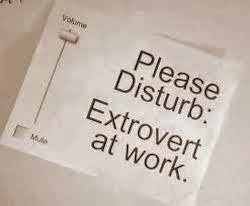
Introversion or extroversion is not about how shy or social you are; it's about how you derive your energy.

An introvert’s source of energy comes from within, from their inner world of thoughts, ideas, and reflections. Introverts direct energy and attention inward and receive energy from reflecting on thoughts, memories, and feelings.

Extroverts, on the other hand, get their essential stimulation from the outer world, the world of people and things. They direct their energy and attention outward and receive energy from interacting with people and from taking action.

Extroverts derive their energy from the outer world.

Introversion and extroversion are not so much personality traits as preferences for interacting with the world in a way that feels the most comfortable to them. Everybody has both qualities in their personality, the inward and the outward energy, but we do tend to lean consistently one way or the other.

Leaders come in both styles. Neither is right or wrong. Both have advantages and both have challenges.


Are You An Extrovert?


To find out what you are, the Meyers BriggsType Indicator (MBTI) is the gold standard. There are also lots of free resources out there. Sites like HumanMetrics offer free quizzes.

But the simplest way to find out if you are an introvert or an extrovert is to answer these questions:

•Generally speaking, are you energized by interactions or enervated by them?

•Generally speaking, where do you focus your attention and energy—outward or inward?

If you are energized by outward interactions you are an extrovert. If you tend to focus your attention and energy outward you are an extrovert. Again, these are general feelings, and everyone has both qualities, but we do tend to lean more one way or the other, and this has an impact on our leadership style.

Extroverts are energized by interacting with other people.


Extroverts in the Workplace


It’s all about where you prefer to focus your attention and get your energy. In general, 

Extroverts:
  • Are attuned to their external environment
  • Prefer to communicate by talking
  • Prefer action over reflection; they can act and respond quickly
  • Work out ideas by talking them through; they speak to think
  • Learn best through doing or discussing
  • Share thoughts freely
  • Are sociable and expressive
  • Extend themselves into their environment
  • Enjoy working in groups

Extroverts are very good at remaining aware of the external environment, maintaining their networks, and taking quick action.


Challenges for Extroverted Leaders


The introversion/extroversion personality preference is important in leadership because it directly pertains to how people relate to other people, especially in terms of communication and engaging with others.

Three of the most important leadership skills are the ability to inspire, motivate, and enable others to act. To do this requires a communication and personal engagement style that promotes a sense of trust and confidence with one’s employees and co-workers.

Extroverts welcome interaction with other people.

When most people think of a leader they probably think of an extrovert. But extroverts may overwhelm and intimidate people, make them feel they aren’t being heard, push ideas prematurely, and unintentionally reveal confidences. They like to think out loud, which can lead to problems. Extroverts have to be careful.


Seven Tips for Extroverted Leaders


Here are some seven tips to help extroverts be better leaders:

1. Ask yourself, why am I talking right now?

2. Try to listen more and reflect back what you just heard.

3. Provide space for other people to contribute.

4. Ask more questions and really listen. Resist the urge to immediately start providing your opinion.

5. Tell introverts ahead of time what you’d like to discuss.

6. Be careful what you say. What you say carries a lot of weight. Too much talking out loud may make you appear indecisive. If you are going to “extrovert” or brainstorm ideas, make sure people know that is what you are doing.

7. Be careful of oversharing. Not everything needs to be discussed out loud.

~~~

The best leaders are those who can inspire, motivate, and enable others to act. You can lead effectively whether you are an extrovert or an introvert. You just need to be aware of the advantages and disadvantages of your style, and work on the things that may challenge you. Good luck!

~~~

To learn more about Careerstone Groups’ programs, please visit:


To listen to Mary’s radio shows or watch her TV appearances, please visit: http://www.careerstonegroup.com/media.html


Tuesday, March 4, 2014

Introverted Leaders: 7 Tips for Success

Are you an innie or an outie? I’m not talking bellybuttons; I’m talking about your leadership style. Are you an introvert or an extrovert?

Leadership, like personalities, comes in different shapes and sizes. Introversion or extroversion is not about how shy or social you are; it is about how you derive your energy.

An introvert’s essential stimulation, their source of energy, comes from within, from their inner world of thoughts, ideas, and reflections. They direct energy and attention inward and receive energy from reflecting on thoughts, memories, and feelings.


Extroverts get their essential stimulation from the outer world, the world of people and things. They direct their energy and attention outward and receive energy from interacting with people and from taking action.

This week, I’m going to talk about the introverted leader. I’ll cover extroverts next week.


What are you?


Introversion or extroversion is not so much a personality trait as it is a preference for interacting with the world in a way that feels the most comfortable to you. Everybody has both qualities in their personality, the inward and the outward energy, but we do tend to lean consistently one way or the other.

To find out what you are, the Meyers Briggs Type Indicator is the gold standard. You can simply Google Meyers Briggs and you'll be directed to lots of sources and short tests you can take to learn more about your personality preference.

But a super easy place to start is to simply assess the way you feel about interactions based on the energy explanations above. Ask yourself:

Are you energized by interactions or enervated by them?

Generally speaking, if you are energized by interactions you are an extrovert. If they enervate you, you are an introvert.


Introverts and extroverts in the workplace


It’s all about where you prefer to focus your attention and get your energy. In general, introverts:
  • Are drawn to inner world
  • Prefer written communication
  • Prefer reflection over action—may need time to “process” before taking action
  • Work out ideas by reflecting and thinking, not speaking (as extroverts do)
  • Learn best by reflection
  • Guard thoughts until they are (almost) perfect
  • Are private and contained
  • Defend against external demands
  • Enjoy working alone or with only a few people 

Introverts are really good at paying attention to the infrastructure, conceptualizing problems, and looking deeply into issues.


The leadership difference


The introversion/extroversion personality preference is important to leadership because it directly pertains to how people relate to other people, especially in terms of communication and engaging with others.

Because introverts are more naturally inclined to focus their energies within they sometimes forget the importance of connecting and communicating with others consistently and openly. In a sense, the introverted leader often has to work a little harder on the “people” side of leadership. When people think of leaders, they usually think of extroverts.


Challenges for introverted leaders


Introverts possess many skills that are associated with great leadership. Introverts are associated with deep reflection and a desire to think through decisions. Introverts are naturally disinclined to be in the middle of the fray, so they can provide an outside perspective on what is happening. They are very good at analyzing and assessing. Because they are listening more than talking, introverts can also gain deeper understandings of situations.


By the same token, introverts tend toward isolation; projections of aloofness, snobbery, or disinterest; lack of communication; and lack of engagement.

Here are some specific strategies introverted leaders can utilize to become better leaders:

1. Communicate, communicate, communicate. Learn to think out aloud. Include others in brainstorming.

2. Use listening skills to create trust and build rapport. One of the greatest projections people make about introverts is that they are great listeners. Use this to your advantage.

3. Reflect back what you’ve heard. People want to know that they have been heard.

4. Involve others and articulate your thinking. Share information freely. Introverts have a habit of delivering full-blown solutions or edicts without articulating the thought process or motivation behind them, so learn to articulate your thinking and involve others.

5. Be accessible. Engage others substantially. Network!

6. Followers need to see you. They need to trust and understand you. They need to think you have their best interests at heart. So get out there.

7. Take care of your solitude. Carve out specific times of solitude for recharging yourself.


The best leaders


The best leader is not an introvert or an extrovert. The best leader is someone who can inspire, motivate, and enable others to act. Introverts can be great leaders, as long as they use their natural abilities wisely and use strategies to overcome the challenges inherent in their personality preference. Good luck!

~~~

To learn more about Careerstone Groups’ programs, please visit:


To listen to Mary’s radio shows or watch her TV appearances, please visit: http://www.careerstonegroup.com/media.html